Is Masculinity Evolving?

The way we understand and portray masculinity is changing and evolving as to how it was in past centuries. While some cultures and group of people still hold on to the construct of masculinity. Society is starting to change and redefine the expectations and roles of what makes a man. 

From a young age, boys are taught to act tough, not show any emotions, and be strong and aggressive in order for them to be respected, without people questioning their manhood. Qualities such as fear, compassion, vulnerability, or sensitivity gets driven out of them and are most likely to be taught to girls. Violence is often linked with being a man because society teaches them that it gives them more power and respect from others. To diminish the idea of being called ‘’feminine’’ or feeling like they don’t belong, men turn to violence out of shame, humility, and fear that they would not be seen as real men. According to the documentary ‘’Tough Guise 2’’ directed by Sut Jhully, Jackson Katz describes that a large percentage of violence is inflicted by men; ‘’Men perpetrate 90% of the violence in society, and society (in media especially) tends to focus on the subordinated groups, not the dominant ones.’’ (Katz, 2013).

However, this idea that violence is the solution, and that suppressing any emotion of sensitivity makes you less of a man is changing. One specific event that opened up the door to progression is the #MeToo movement. The #MeToo movement gave a voice to women (and men) against sexual harassment and assaults, and all in all toxic masculinity, ‘’the #MeToo movement emerged. It continues to call out – and cut down – powerful men who have bullied, harassed and assaulted women (and young men, too).’’ (Morton, 2019). While the movement is targeted towards men, it raised awareness to the inequality and oppression that is occurring, as well as opening up a door for other men who were too afraid to speak their truth and tell their story, because society tells them it can make them less of a man. Actor Terry Crews opened up about how the #MeToo movement made him speak up about being a victim of sexual harassment and he mentions that some people— particularly men— dismissed him. He mentions that one man even says, ‘’a guy like him couldn’t be sexually abused, due to his size and physique. (As one comedian put it, “God gave you muscles so you can say no.”)’’ (Bradley, 2018).

Studies show that a large percentage of men feel like they are not superior to women in the workplace, ‘’ more than 75% of men don’t believe there are any advantages today to being a man at work, and they are “fractured” about their role in society.’’ (Rohit, 2018). Thus, not everyone in society is accepting of the redefinition of masculinity in this day and age. Some men in society are  questioning their role in society and believe that they don’t have the same ability to explore their sensitive side as women do, ‘’boys are rarely offered the same flexibility to explore their feminine sides as girls are encouraged to act in more “boyish” way’’ (Rohit, 2018).

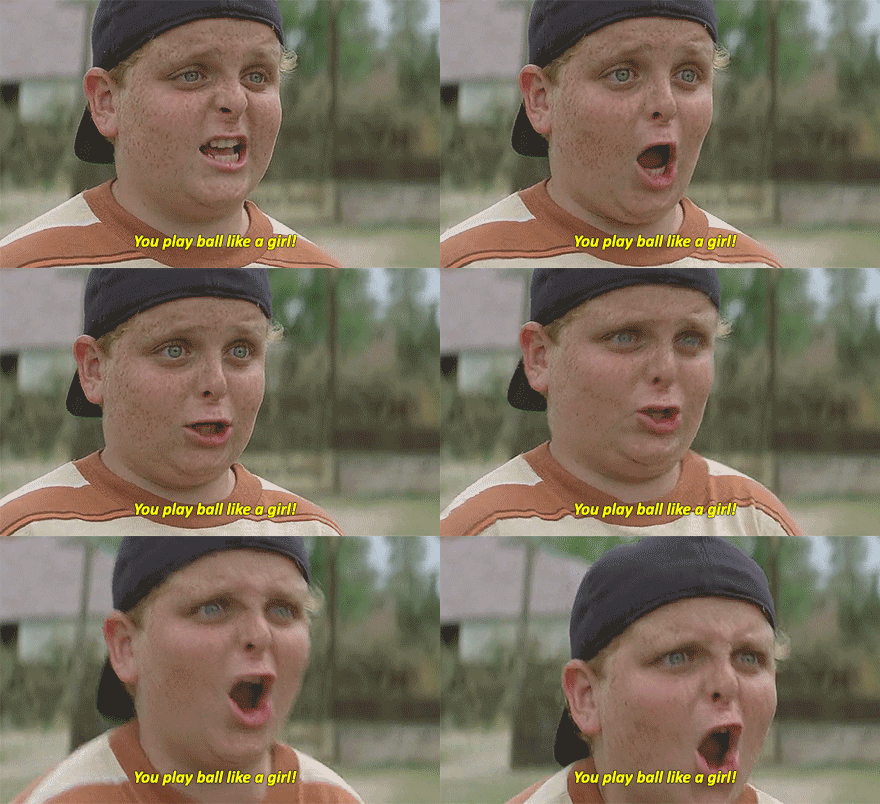
giphy-3
http://gph.is/2d0xF77


While the definition of what being a man is, is changing and evolving, there are still people who feel like they are not free to express who they are without feeling inferior in society. The #MeToo movement has a significant influence on raising awareness towards male victims and how the social construct of masculinity can limit men to express who they are and be in contact with their emotions. 


Bonobos. (2018, July 17).  Retrieved from https://www.youtube.com/watch?v=j6jz2Jma5-s.

Bradley, L. (2018, October 05). “I Was Terrified, and I Was Humiliated”: #MeToo’s Male Accusers, One Year Later. Retrieved from https://www.vanityfair.com/hollywood/2018/10/metoo-male-accusers-terry-crews-alex-winter-michael-gaston-interview

Handler, C. (2019, March 25). Edgar Ramirez Equality GIF by Chelsea Handler – Find & Share on GIPHY. Retrieved from https://giphy.com/gifs/chelseashow-chelsea-l3vR5WkxPJoYeGo4o/links

Morton, S., & MortonSteve, S. (2019, February 21). Traditional Masculinity is Evolving. Retrieved from https://goodmenproject.com/guy-talk/traditional-masculinity-is-evolving-cmtt/

Rohit. (2018, July 19). Masculinity Evolving: What Does It Mean To Be A Man Today? Retrieved from https://www.rohitbhargava.com/2018/07/masculinity-evolving-definition-being-a-man.html

Jhully, S. (Director). (2014, October 20). Tough Guise 2[Video file]. Retrieved from https://www.google.ca/urlsa=t&rct=j&q=&esrc=s&source=web&cd=2&cad=rja&uact=8&ved=2ahUKEwjEzsX0cXhAhUm2FkKHdeqA1AQwqsBMAF6BAgJEAc&url=https://vimeo.com/ondemand/22866&usg=AOvVaw36iYwSaZZHrjmOLtKTG5xI


Gender & The Media

The media controls the way we think. It portrays an idea of how reality is and how people act, especially when talking about gender. The media is an important factor in social science and how the world is today because it can promote sexuality, gender stereotypes, gender ideologies, as well as gender roles. 

In this time and age, the media —social media, television, movies, video games, etc. — are essential in most people’s everyday life. The media is set to pass out a certain message to the audience, and what sells the most in the media is sex and all the ideas that revolve around that. We often see that in most media displays, men and women play different roles. For example, in most commercials, women tend to showcase the objects by caressing them or holding them in a specific way and appearing very feminine. They are told to use and focus on their femininity to sell the object. However, men are told to be very masculine and aggressive. Moreover, there is a difference between the objects that men and women are told to sell in commercials. We are more likely to see men selling beer in commercials than women, perhaps because it is portrayed as ‘’manly.’’

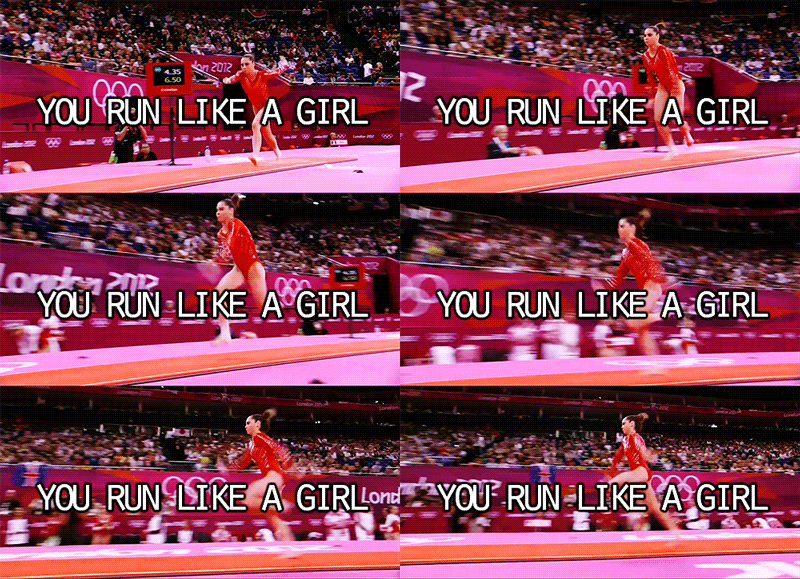
giphy-2
https://gph.is/1h9h644

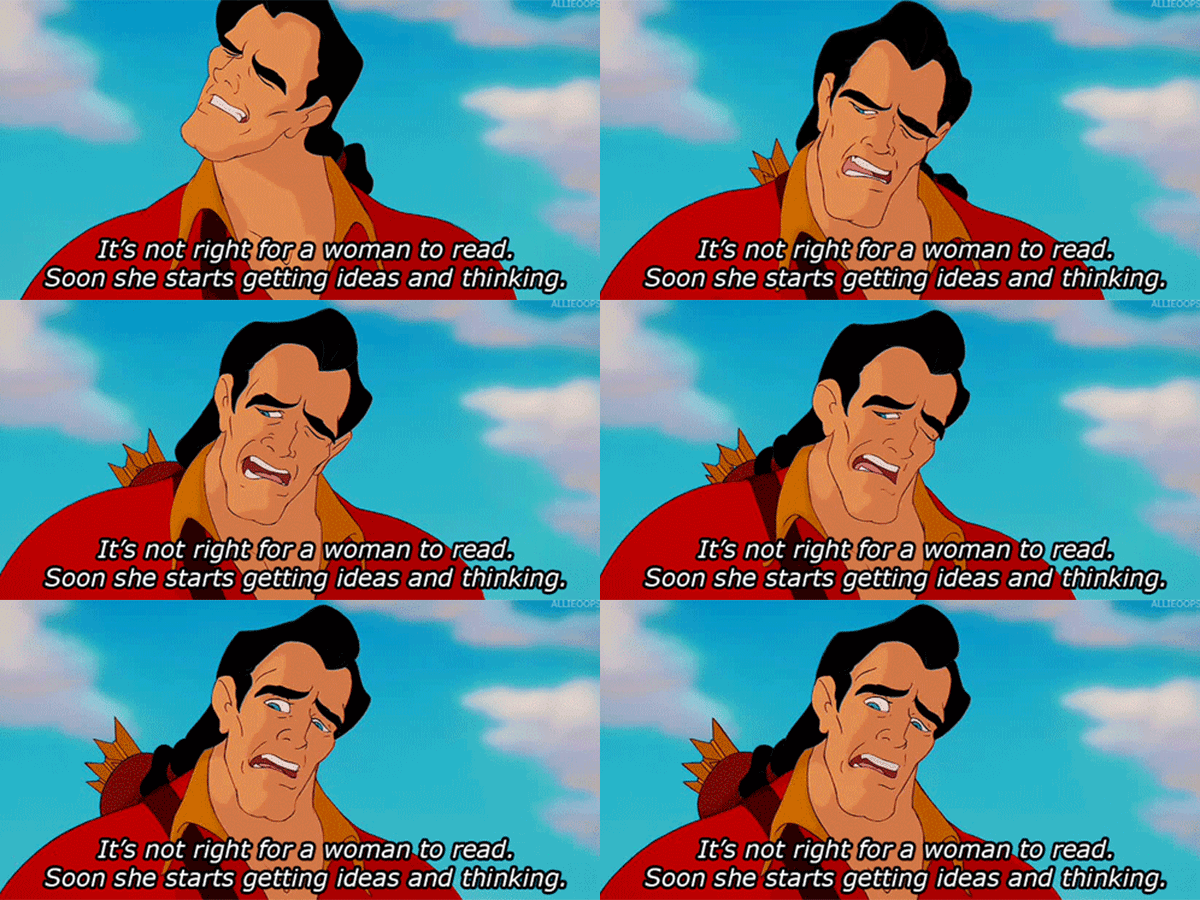
In most movies, for instance, The Little Mermaid, it shows us that the main female character, Ariel, gives up everything for a man, even if it was giving up a piece of who she is. We also see that in most Disney movies, the princesses wait for a prince to come save them so they can get a happily ever after. What we can conclude from this is that children, and the audience in general, are being taught that in order for women to be happy and succeed in life, she needs a man to help lead her to where she needs to be. We also see that most male characters in these movies, such as are shown to be tough, unbeatable, overly-attractive, and overall, perfect. This is also an inaccurate representation of how a man should be and can put pressure on young children to meet these unrealistic expectations.

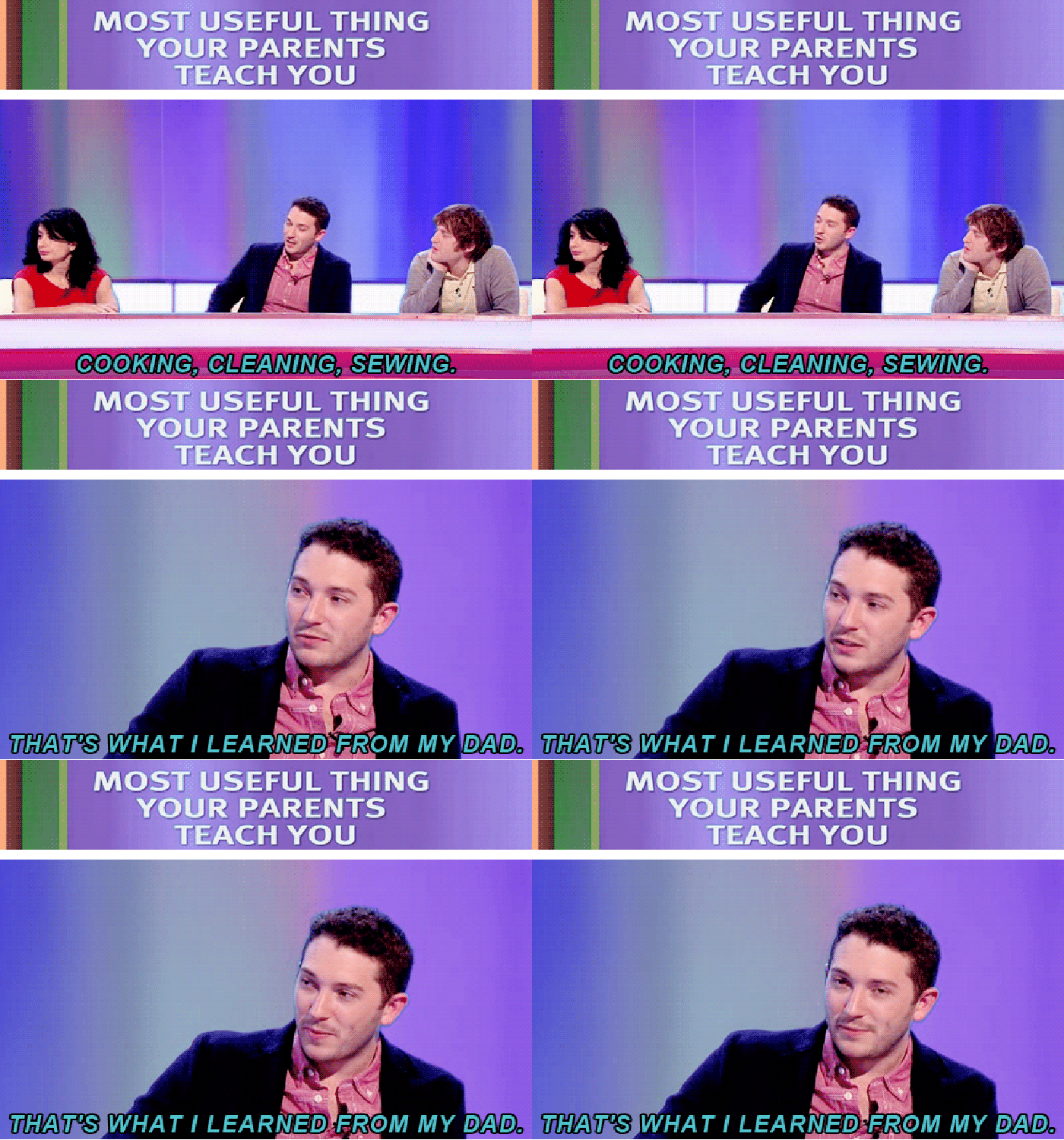
giphy-1
https://gph.is/1hFlNFe


To expand more on unrealistic expectations seen on the media; we see in video games, movies,  social media, etc. Women and men are portrayed to be far from what reality is. For instance, in video games, many female players have hourglass figures with costumes that expose many parts of their bodies. From this, we can interpret that they are objectifying women based on their bodies and what they look like, rather than their skill level. As opposed to male players, who are presented to be strong and manly to showcase their skill level.

Fortunately, things are changing, we see the media coming out with movies, shows, commercials that are helping people understand and be aware of reality. For example, the movie Frozen shows that you don’t need a prince to save you, and the latest Gillette commercial represents toxic masculinity and what being a man is really about. The media is starting to change and aim towards teaching its audience and educating about gender and the changes our society has gone through.

giphy
https://gph.is/1oSseXv


Giphy. Giphy, September 16, 2014. https://giphy.com/gifs/ZGIwq6E3sc480/html5

Giphy-1. Giphy, January 20, 2014. https://giphy.com/gifs/MjL60N9qVx6og/html5

Giphy-2. Giphy, September 27, 2013. https://giphy.com/gifs/3vDFxcB9vZNNS/html5

Wood, J. T. (n.d.). Gendered Lives: Communication, Gender, and Culture. Gendered Media: The Influence of Media on Views of Gender,231-244. Retrieved from https://www.nyu.edu/classes/jackson/causes.of.gender.inequality/Readings/Wood – Gendered Media – 94.pdf.

Gender Identity

Gender identity is the personal sense of who a person identifies as or with, in terms of gender. People often think that if a person is born either female or male, they must automatically identify as that specific anatomy, and there are many people that do so. However, this is not the case for everyone. In our modern society especially, people have become more and more vocal about who they are and what they identify as. Gender identity is also formed through the cultural and social aspects that a person is taught or learned throughout their life, which is how it relates to social science. People are detaching themselves from the gender norms and rules that society has constructed and letting themselves be the person they want to be without any restrictions. 

giphy-10
https://gph.is/1Izqgue

There are many gender identities that people can identify with, such as male, female, transgender, non-binary, gender neutral, genderqueer, and many more that we may be unaware of. When addressing people who identify as a gender different than your own, we must be cautious of the terms, or pronouns we use to address that person. E.g he, she, they etc.  

The idea of gender can be complex and kept within bounds for many people who are expected to act a certain way in society and have limitations of who they should be, according to the sex they were born with. Which is why people use their identities as a way to escape and look for deeper meanings on how to live life.

The controversy with gender identity mostly comes from people who might be from older generations and who come from a time where there was no questioning in how society was constructed, and the way of life in general, which is a lot different to how thing are now. Even though we still have a long way to go in terms of accepting change and welcoming people who  can be different from us, our society has faced progression in terms of freedom of speech and liberty during the 21st century; with no disregards of the challenges and obstacles people lived to get to the phase of being accepted, respected, and being comfortable to express who they are with their surroundings.

giphy-11
https://gph.is/1xGdGBW

Gender identity really does shape people into becoming their most authentic self and liberates them from the construction of society that one might not fit into. Even a person who identifies as being male, or female, can feel like they need to escape the expectations and roles that they are told they must commit to in society, and use their identity in a much liberating way that exceeds the ‘’normal.’’ The only way to move forward and live a better life is to encourage people to be who they are and not be afraid of society holding them back.

giphy-12
https://gph.is/1cpuFO3


“Gender Identity.” Teen Talk, teentalk.ca/learn-about/gender-identity/.

Giphy-10. Giphy, 27 July 2015, media.giphy.com/media/r8934iwOgmMG4/giphy.gif.

Giphy-11. Giphy, 1 January 2015, https://giphy.com/gifs/G8yDgRSXRGdK8/html5.

Giphy-12. Giphy, 26 December 2013, https://giphy.com/gifs/X4M6homF66qFq/html5


Feminism


main-qimg-5734859668d7939b4d4847758b0dcf68
https://goo.gl/images/neis8x


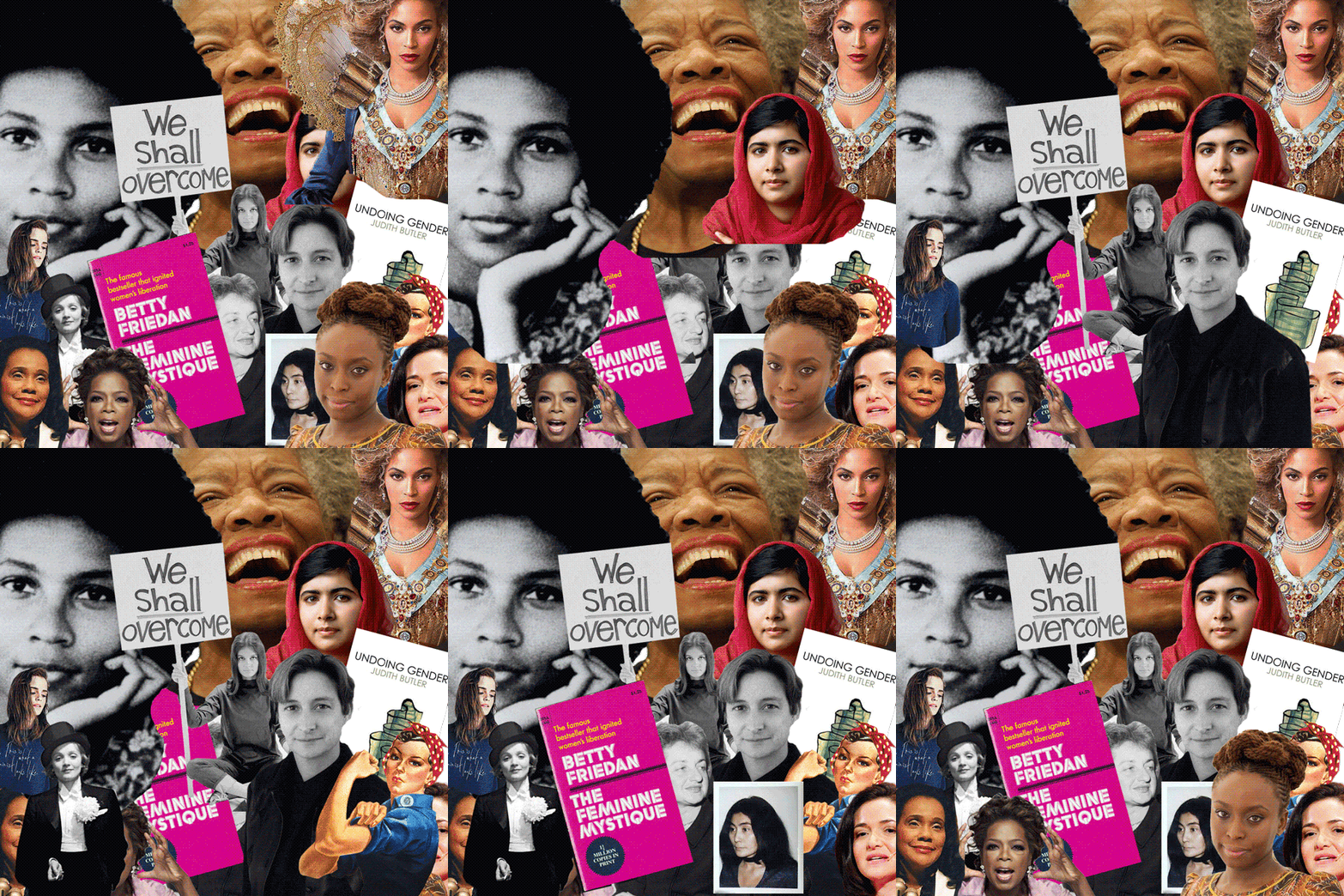
Feminism is the belief in equality of the sexes in terms of the political, social, and economic aspects in society. Feminism is found all around the world, and it has different types, but they all have the same goal or purpose.

giphy-7
https://gph.is/2gm2XfK


For a long period of time, men were dominant in society and there was a major amount of inequality between men and women. Women were denied from participating in many elements in society, such as education, ownership of property, and as late as the 20th century, voting. Moreover, there was also unequal pay in factories and other workplaces, where men would make more money than women even though they are doing the same job. In some places in the world, inequality for women still exists. There is a misconception that feminism aims to overpower women over men. However, the main focus of feminism is to have equality for both sexes and for them to coexist by having the same basic civil rights after centuries of nonexistence.

There are three different types of feminism or rises of feminism that took place throughout history. The first feminist wave took off in the late 19th century and early 21st century, which targeted change for property ownership, equal contract, male possession in marriage, and gaining political power. By 1919, with the efforts of many feminists, including Frances Willard and Matilda Joslyn Gage, women were granted the right to vote in America, and by 1928, the Representation of the People Act allowed women over 21 to vote which took 10 years to change, since it was previously women who are 30 and owned property. 

The second wave of feminism lasted from the 1960s to 1980s, focused on the problems that existed after the first wave of feminism took place, such as discrimination that women faced in political and cultural environments, and in the workplace by their peers.

giphy-8
https://goo.gl/images/neis8x


The third wave of feminism started in the early 1990s, the third wave aimed to redefine the meaning of feminism after the backlash and the downfall of the second wave of feminism, which many believed was a movement that showed one form of feminism that everyone should follow and go by, rather than one that lets them discover and define what feminism really is. The third wave promoted diversity and identity, and encouraged women to express personal experiences in terms of inequality and oppression.

Feminism has tremendously impacted society and the way we live today by changing and improving the lives of women worldwide. Feminism challenged political, economic, and social systems, and addressed issues that women struggled with, and still do to this day, such as, the impact of gender roles in society, race, sexual assault, equal pay, injustice in the workplace, the rights to their own body, oppression, violence, and other factors that threatened the well-being of girls and women all around the world. In the 21st century, women still face discrimination and inequality in different forms. However, feminism is still aiming to change that and achieve justice and equality.

giphy-9
https://gph.is/2EADaYX


Press-citizen.com. (2019). [online] Available at: https://www.press-citizen.com/story/opinion/contributors/guest-editorials/2015/02/22/feminism-significant-impacts-lives-society/23769369/ .

Encyclopedia Britannica. (2019). feminism | Definition, History, & Examples. [online] Available at: https://www.britannica.com/topic/feminism#ref216004

Gender.cawater-info.net. (2019). History and theory of feminism. [online] Available at: http://www.gender.cawater-info.net/knowledge_base/rubricator/feminism_e.htm 

main-qimg, (2019). [image] Available at: https://goo.gl/images/neis8x 

giphy-7. (2019). [image] Available at: https://gph.is/2gm2XfK 

giphy-8, (2019). [image] Available at: https://gph.is/2rpEFpK 

giphy-9, (2019). [image] Available at: https://gph.is/2EADaYX 

My Gender & I

Welcome to my page!

”people share a common nature but are trained in gender roles.” – Lillie Devereux Blake

men-and-women

https://goo.gl/images/2vkSpS

By definition, gender is ”either of the two sexes (male and female), especially when considered with reference to social and cultural differences rather than biological ones. The term is also used more broadly to denote a range of identities that do not correspond to established ideas of male and female.”

giphy-1
https://gph.is/1egqER8

During the 14th century, gender started to be seen as a social construct. Feminism was the main leader, along with social scientists who studied the social attitudes, norms, and representations of gender identities in society, for the development and improvement of the sociological creations of gender roles or norms, they argued that society and our cultural background is the primary source that sets out these differences and labels among men and women. However, other people argued that gender is not a social construct, but rather a representation of the biological factor of humans that guide us to our place in society, and which we must portray accordingly.

http://gph.is/1egqER8

giphy-3

https://gph.is/1oWSwGE

https://gph.is/1U7Ddwn

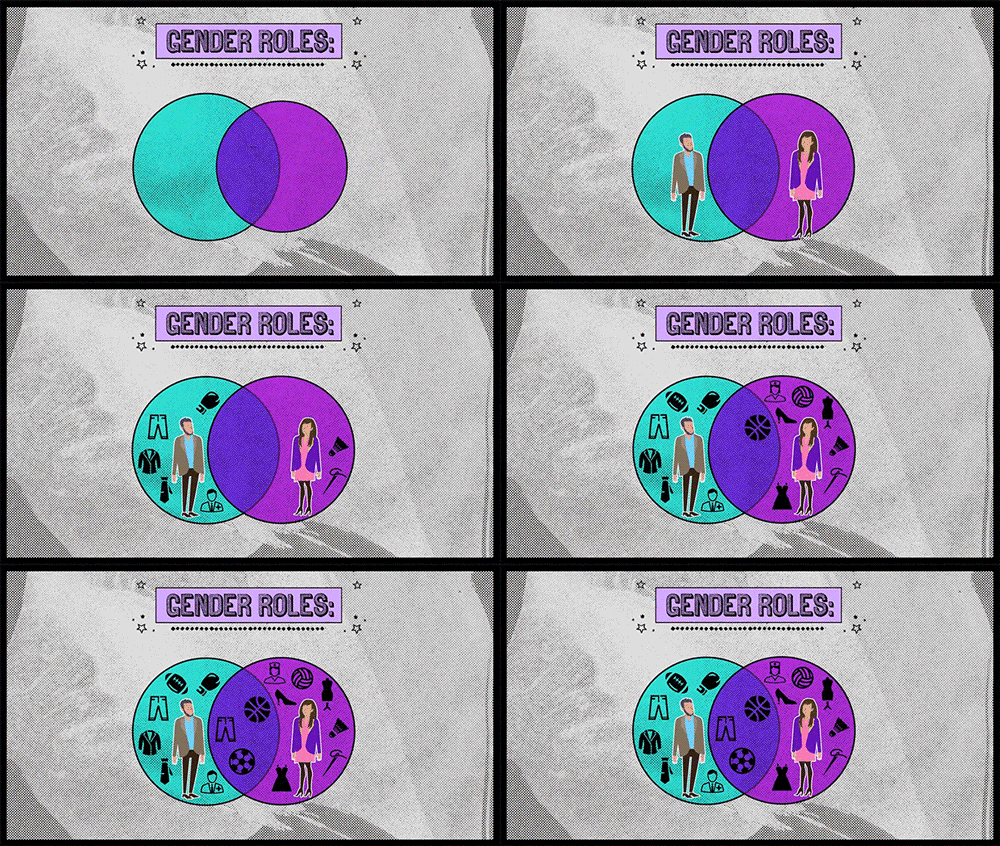
Gender roles are based on the ideas of being ”feminine” or ”masculine”, according to one’s biological anatomy. Gender roles created a ”box” that limited people’s ideas, dreams, rights, and freedom. With gender roles came many gender expectations that people had to follow for many centuries, and still do to this day. An example of some of the expectations would be, ”toxic masculinity” that men had to accommodate. Toxic masculinity is the stereotypical masculinity that restricts men from expressing any type of emotion or sensitivity, along with the expectation for them to be dominant and superior in society. On the other hand, women were expected to be the emotional and inferior gender, and express behaviour that is ”feminine.” These gender roles, or expectations, can affect relationships between people by limiting their capacity to fully express their emotions and feel safe or comfortable around their peers. For example, women can feel threatened to show their independence and strong-will, and men can be hesitant to open up and talk about their feelings; if those around them are firm followers/believers of the idea of gender roles in society.

https://gph.is/1CPldOs

giphy-6.gif

https://gph.is/1mYmQnF

https://gph.is/17SQUss

Gender stereotypes still upon us. Nevertheless, compared to the 15th century, there has been an obvious improvement in reducing or vanishing the existence of these gender roles, or stereotypes, and allowing people to be whoever they want to without limiting their rights, in accordance to the sex they were born into. Some ways we have seen these changes being made is through social media, magazines, commercials, social movements, etc. However, some of these sources, such as magazines or social media, still advocate these gender expectations by using women as ”objects” to sell their products and portraying men as strong, aggressive creatures. This puts a pause or limits the growth or development of the removal of gender roles. With that being said, we can’t ignore the positive movements, such as MeToo movement, Times Up, Women’s march, Gillette’s Toxic masculinity ad, that helped in empowering both men and women and allowing them to be the people they want to be, without any gender roles restraining that.

Gender (n.). (n.d.). Retrieved from https://www.etymonline.com/word/genderParenthood, P. (n.d.).

Gender Identity & Roles | Feminine Traits & Stereotypes. Retrieved from https://www.plannedparenthood.org/learn/sexual-orientation-gender/gender-gender-identity/what-are-gender-roles-and-stereotypes

Sociology of Gender. (2018, June 29). Retrieved from https://othersociologist.com/sociology-of-gender/

men-and-women. (2019). [image] Available at: https://goo.gl/images/2vkSpS 

giphy-1. (2019). [image] Available at: https://gph.is/1egqER8

giphy-4. (2019). [image] Available at: http://gph.is/1egqER8 

giphy-3. (2019). [image] Available at: https://gph.is/1oWSwGE 

giphy. (2019). [image] Available at: https://gph.is/1U7Ddwn

giphy-5. (2019). [image] Available at: https://gph.is/1CPldOs

giphy-6. (2019). [image] Available at: https://gph.is/1mYmQnF 

giphy-2. (2019). [image] Available at: https://gph.is/17SQUss 


Design a site like this with WordPress.com
Get started